

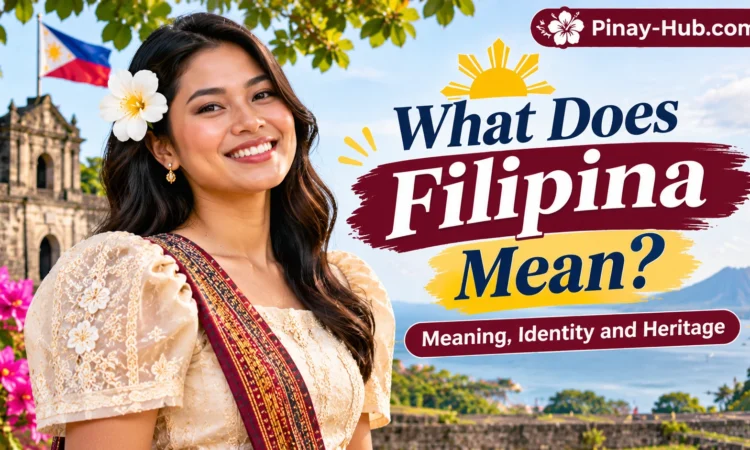
People often encounter the term in conversations about Filipino culture, international communities, women’s achievements, and cultural identity. However, questions about its meaning, origin, and difference from related words such as Filipino and Pinay can sometimes create confusion.
Understanding what Filipina means helps readers appreciate the diversity of Filipino communities and the experiences of women connected to the Philippines. This guide explores the definition, linguistic background, cultural significance, and modern use of the term.
What Does Filipina Mean?
Filipina is a noun and adjective used to describe a woman or girl from the Philippines or of Philippine descent. It is the feminine form traditionally associated with Filipino.
According to the Cambridge Dictionary, a Filipina is a woman from the Philippines. The term can also describe women of Filipino origin who live in other countries.
For example:
-
A woman born and raised in Manila may identify as Filipina.
-
A woman with Filipino parents who grew up in Canada may describe herself as Filipina.
-
A Filipino woman living in Australia may use the term when discussing her cultural background.
The word is commonly used in everyday conversations, international publications, cultural discussions, and descriptions of Filipino women.
Understanding the Origin and Background of Filipina
The word Filipina has a historical connection to the Spanish-language name Filipino. Its development reflects the linguistic and colonial history of the Philippines.
The name Philippines comes from the Spanish Islas Filipinas, named in honor of Philip, Prince of Asturias, who later became King Philip II of Spain. The feminine form Filipina developed from the Spanish feminine form of Filipino.
The word Filipino also changed in meaning over time. During the Spanish colonial period, its usage was initially associated with Spaniards born in the Philippines. Nineteenth-century Filipino nationalists, including José Rizal, helped broaden its meaning to include the indigenous and mixed populations of the archipelago.
Today, Filipina is widely recognized as a term for women connected to the Philippines through nationality or heritage.
What Is the Difference Between Filipina, Filipino, and Pinay?
These three terms are closely connected, but their traditional usage differs.
| Term | Meaning |
|---|---|
| Filipina | A woman from the Philippines or of Filipino heritage |
| Filipino | A person from the Philippines; also used as a national and cultural identity term |
| Pinay | An informal term commonly used for a Filipino woman |
Filipina
Filipina is the feminine form traditionally used to describe a woman from the Philippines. It is common in English-language writing and cultural discussions.
Filipino
Filipino can refer to a person from the Philippines regardless of gender, particularly in contemporary usage. It is also the name of the country’s national language.
Pinay
Pinay is an informal expression associated with Filipino women. It is frequently used in everyday conversations and discussions about Filipino identity.
The choice between these terms depends on the context, audience, and personal preference. When referring to a mixed-gender group or the population generally, Filipino people or Filipinos can avoid unnecessary gender distinctions.
Filipina Identity and Filipino Cultural Heritage
Filipina identity is connected to a diverse cultural background shaped by regional traditions, languages, family histories, and historical influences.
The Philippines consists of many communities with different customs and ways of life. Therefore, there is no single experience that represents every Filipina.
Regional Traditions and Languages
Filipino women may have backgrounds connected to different regions, including Luzon, Visayas, and Mindanao.
Languages such as Tagalog, Cebuano, Ilocano, Hiligaynon, and Waray are part of the country’s linguistic diversity.
These regional connections influence family traditions, celebrations, food, and everyday communication.
Family and Community Connections
Family relationships and community participation are important parts of life for many Filipino households.
Cultural experiences may include family gatherings, religious celebrations, community festivals, and traditional occasions.
However, family structures and personal values differ from one individual and household to another.
Food, Festivals, and Traditions
Food and celebrations provide another way to understand Filipino heritage.
Dishes such as adobo, sinigang, and pancit are associated with different Filipino culinary traditions. Festivals and local celebrations also reflect the history and identity of individual communities.
For many Filipinas, these cultural experiences provide meaningful connections to their families and backgrounds.
The Role of Filipinas in Modern Society
Filipino women contribute to different areas of society, including education, healthcare, business, technology, public service, and creative industries.
Their experiences and opportunities vary, but their contributions are an important part of the Philippines’ social and economic development.
Education and Professional Development
Filipinas work across many professional fields, including teaching, medicine, engineering, research, and information technology.
Education provides opportunities for women to develop professional skills, pursue careers, and participate in their communities.
Business and Entrepreneurship
Many Filipino women participate in entrepreneurship, small businesses, and commercial activities.
Their work can include local retail, food businesses, online stores, creative services, and professional consulting.
Women-led businesses also contribute to local economic activity and provide opportunities for other community members.
Arts, Media, and Creative Industries
Filipino women participate in music, film, literature, journalism, fashion, and digital content creation.
Through creative work, they share personal perspectives, explore cultural themes, and introduce Filipino experiences to international audiences.
Filipina Identity Among Overseas Filipino Communities
Filipina identity is not limited to women who currently live in the Philippines.
Many women of Filipino heritage live in countries such as the United States, Canada, Australia, and the United Kingdom. Some were born in the Philippines and migrated later, while others grew up abroad in Filipino families.
Their experiences can involve maintaining family traditions while adapting to different cultural environments.
Maintaining Cultural Connections
Filipinas living abroad may maintain connections with their heritage through:
-
Speaking Filipino or regional languages with family members.
-
Preparing traditional Filipino dishes.
-
Celebrating important Filipino occasions.
-
Participating in cultural organizations and community events.
-
Sharing family stories and traditions with younger generations.
These activities can help preserve cultural knowledge across generations.
Understanding Filipino Identity Across Generations
Second-generation and later-generation Filipinas may experience their heritage differently from people who grew up in the Philippines.
Some may speak Filipino languages fluently, while others may understand only a few words. Some may participate regularly in cultural traditions, while others may explore their heritage later in life.
There is no single correct way to experience Filipino identity. Personal background, family history, and individual choices all influence how someone connects with the term Filipina.
How Is the Term Filipina Used in Modern Society?
The term Filipina appears in different settings, including news publications, academic discussions, social media, entertainment, and everyday conversations.
Its usage can depend on the subject being discussed.
In everyday conversations: People may use Filipina to describe a woman’s nationality or cultural background.
In media and publications: The word can identify Filipino women in news stories, interviews, entertainment, and cultural features.
In international communities: Filipina can describe women of Philippine heritage who live outside the country.
In professional settings: The term may appear in discussions about women’s representation, education, business, and professional achievements.
Digital platforms have also made Filipino cultural stories more accessible to international audiences. They allow people to exchange experiences and learn about different aspects of Filipino heritage.
Common Misunderstandings About the Word Filipina
Although Filipina is a widely recognized term, some misunderstandings can arise when people use it without considering cultural context.
1. Assuming Every Filipina Has the Same Background
The Philippines has diverse regional communities, languages, and traditions. A Filipina from Cebu may have different cultural experiences from someone raised in Manila or Davao.
2. Confusing Filipina With Filipino
Filipina traditionally identifies a woman, while Filipino can describe a person of any gender in contemporary English usage.
3. Assuming Filipina Only Refers to Women Living in the Philippines
Women of Filipino descent living overseas may also identify as Filipina.
4. Connecting Identity Only With Appearance
Filipino identity cannot be determined by appearance alone. Family heritage, nationality, cultural connections, and personal identification can all be relevant.
5. Treating Cultural Traditions as Universal
Not every Filipina follows the same customs, speaks the same language, or celebrates every traditional occasion. Individual experiences should be respected.
Why Is Understanding Filipina Identity Important?
Understanding the meaning of Filipina helps people communicate more accurately and appreciate Filipino culture.
It also provides an opportunity to recognize the diversity of Filipino women’s experiences across different generations and countries.
For international readers, learning about the term can improve cultural understanding. For Filipinas living abroad, it may help explain connections with their families, heritage, and communities.
Cultural identity is not fixed in one form. It can develop through family relationships, migration, education, language, and personal experiences.
Conclusion
The word Filipina describes a woman from the Philippines or a woman of Filipino heritage. Its linguistic roots connect to the Spanish feminine form of Filipino, while its modern usage reflects the diverse identities of Filipino women around the world.
Understanding the meaning of Filipina also means recognizing that Filipino identity includes different languages, regional traditions, family backgrounds, and personal experiences.
Whether someone lives in the Philippines or overseas, the term can provide a meaningful way to describe a connection with Filipino heritage. Through its cultural guides and informational articles, Pinay Hub aims to help readers explore these topics and develop a better understanding of Filipino identity.
Frequently Asked Questions About Filipina
1. What does Filipina mean?
Filipina refers to a woman or girl from the Philippines or a woman of Filipino heritage. It is the feminine form traditionally associated with Filipino.
2. What is the difference between Filipina and Filipino?
Filipina traditionally refers to a woman, while Filipino can refer to a person from the Philippines regardless of gender. Filipino is also the name of the country’s national language.
3. Is Filipina the same as Pinay?
Both terms are associated with Filipino women. Filipina is a more standard term, while Pinay is an informal expression commonly used in everyday conversations and cultural discussions.
4. Can someone living abroad identify as Filipina?
Yes. Women of Filipino heritage living in other countries can identify as Filipina, whether they were born in the Philippines or grew up abroad.
5. What is the origin of the word Filipina?
Filipina comes from the Spanish feminine form of Filipino. Its linguistic history is connected to the colonial-era name of the Philippine Islands.
6. Is Filipina a nationality or cultural identity?
It can describe nationality, heritage, or cultural identity. The specific meaning depends on an individual’s background and the context in which the term is used.
7. What languages do Filipinas speak?
Filipinas may speak Filipino, English, or regional languages such as Cebuano, Ilocano, Hiligaynon, and Waray. Language use varies by region and personal background.
8. Does Filipina only refer to women born in the Philippines?
No. The term can also describe women of Filipino descent born or raised in other countries.
9. Why is Filipina identity important?
Filipina identity can represent cultural heritage, family history, community connections, and personal experiences. Understanding it encourages cultural awareness and respect for Filipino diversity.
10. How is Filipina different from Filipinx?
Filipina is traditionally a feminine term, while Filipinx is a gender-inclusive identity term used by some people of Filipino heritage. Individual preferences vary.





[…] Filipino identity involves more than knowing someone’s nationality. It also means exploring the […]